Showing posts with label FLOWER. Show all posts

ROMDOUL FLOWER.


With its durable stems that measure up to 30cm, the Romdoul plant can develop to a tallness of 12 meters. These plants are planted to upgrade open parks.


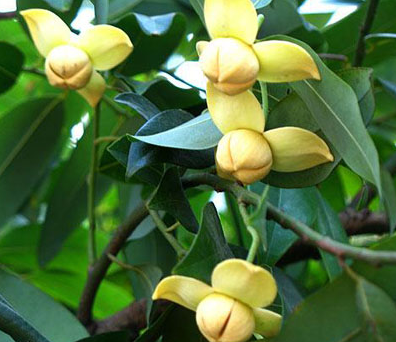
Romdoul, a little yellowish-white bloom with a solitary substitute leaf, is the national blossom of the kingdom of Cambodia. Since antiquated times, Cambodia ladies have regularly been contrasted with the Romdoul blossom due to its appealing scent, an exceptional fragrance that is unmistakable in the late evening and can go over long separations with the wind. With its tough stems that measure up to 30cm, the Romdoul plant can develop to a tallness of 12 meters. These plants are planted to upgrade open parks.


The rumduol (Khmer: រំដួល), as it is known in Cambodia, is regularly planted in greenhouses and stops as it is esteemed for its aroma. Thebloomsare utilized to make a scented lip wax called kramuon rumduol (Khmer: ក្រមួនរំដួល). A few districts in Cambodia are named after this blossom, for example, Romdoul District and Ou Rumduol. In a 2005 illustrious announcement by King Sihamoni of Cambodia, the rumduol was broadcasted the national blossom of Cambodia, however this declaration references an invalid equivalent word for this taxon, Mitrella mesnyi. The rumduol is frequently alluded to as Popowia aberrans on natural signs and as noted by Headley in the Cambodian-English dictionary.


Continue Reading...

ORCHIDACEAE

Orchidaceae is a various and far reaching group of blooming plants with sprouts that are frequently bright and regularly fragrant, ordinarily known as the orchid crew.

Orchids have long been an image of affection and magnificence. Developed by aficionados for their sheer tastefulness and interest, they're likewise supported as either a corsage worn on the dress, or as a wristband at numerous proms and extraordinary occasions. On numerous events, from weddings to gatherings, splashes of orchids beauty the tables as embellishment. With more than 750 genera of orchids, more than 30,000 half and halves and more presented consistently, there is a colossal mixed bag of orchids to look over for the orchid devotee. In fact, orchids develop in every mainland except Antarctica, so a producer can pick between local orchids or presented ones, contingent upon accessibility and suitability. Keeping in mind the genuine orchid lover could (and ought to) invest impressive time poring through whole tomes on the development and consideration of orchids, the first run through producer needs to start some place. In this article, you'll take in the essentials of watching over orchids that are by and large vigorous and simple to develop. Once you've gotten a handle on these essentials, on the off chance that despite everything you find your enthusiasm for orchids increasing, you'll have the capacity to investigate the all the more difficult orchid mixtures as you pick up certainty.


Orchidaceae is a differing and far reaching group of blooming plants with blossoms that are regularly brilliant and frequently fragrant, ordinarily known as the orchid crew. Alongside the Asteraceae, they are one of the two biggest groups of blossoming plants, with somewhere around 21,950 and 26,049 presently acknowledged species, found in 880 genera. The determination of which family is bigger is still under level headed discussion, in light of the fact that checked information on the individuals from such colossal families are constantly in flux. Notwithstanding, the quantity of orchid species almost parallels the quantity of hard fishes and more than double the quantity of feathered creature species, and around four times the quantity of warm blooded animal species. The family likewise incorporates around 6–11% of all seed plants. The biggest genera are Bulbophyllum (2,000 species), Epidendrum (1,500 species), Dendrobium (1,400 species) and Pleurothallis (1,000 species). The family additionally incorporates Vanilla (the sort of the vanilla plant), Orchis (sort variety), and numerous usually developed plants, for example, Phalaenopsis and Cattleya. Besides, since the presentation of tropical species into development in the 19th century, horticulturists have created more than 100,000 half and halves and cultivars.


The ovary commonly forms into a case that is dehiscent by three or six longitudinal openings, while staying shut at both finishes. The seeds are for the most part just about infinitesimal and exceptionally various, in a few species over a million every case. In the wake of aging, they pass over like dust particles or spores. They need endosperm and must enter advantageous associations with different mycorrhizal basidiomyceteous organisms that give them the fundamental supplements to sprout, so that all orchid species are mycoheterotrophic amid germination and dependent upon growths to finish their lifecycles. Closeup of a Phalaenopsis bloom As the chance for a seed to meet a suitable organism is little, one moment part of every last one of seeds discharged develop into grown-up plants. In development, germination normally takes weeks. Green systems have been concocted for growing orchid seeds on a fake supplement medium, disposing of the necessity of the organism for germination and extraordinarily supporting the proliferation of fancy orchids. The typical medium for the sowing of orchids in counterfeit conditions is agar gel consolidated with a starch vitality source. The sugar source can be blends of discrete sugars or can be gotten from different sources, for example, banana, pineapple, peach or even tomato puree or coconut water. After the planning of the agar medium it is filled test tubes or jugs which are then autoclaved (or cooked in a weight cooker) to sanitize the medium. In the wake of cooking, the medium starts to gel as it cools.


Continue Reading...

LOTUSE FLOWER.

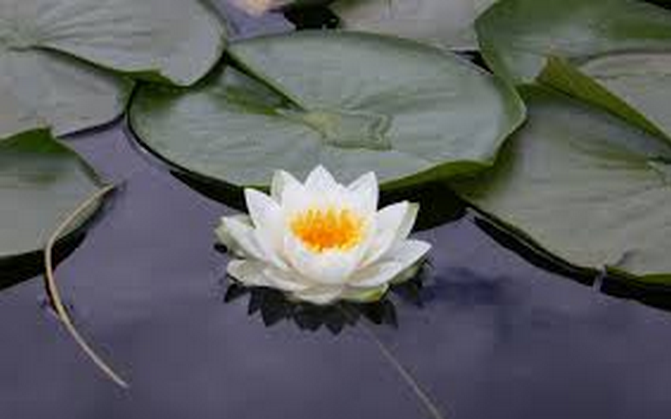
Nelumbo nucifera, also known as Indian lotus, sacred lotus, bean of India, or simply lotus, is one of two species of aquatic plant in the family Nelumbonaceae.
While all advanced plant scientific classification frameworks concur that this species has a place in the family Nelumbo, the frameworks differ as to which family Nelumbo ought to be set in, or whether the sort ought to have a place in its own particular novel family and request. The lotus is frequently mistaken for the water lilies (Nymphaea, specifically Nymphaea caerulea, infrequently called the "blue lotus"). Truth be told, a few more established frameworks, for example, Bentham and Hooker (which is broadly utilized as a part of the Indian subcontinent) call the lotus Nymphaea nelumbo or Nymphaea stellata. This is, nonetheless, developmentally wrong, as the lotus and water-lilies are for all intents and purposes disconnected. A long way from being in the same family, Nymphaea and Nelumbo are individuals from distinctive requests (Nymphaeales and Proteales separately).


The foundations of lotus are planted in the dirt of the lake or waterway base, while the leaves glide on top of the water surface or are held well above it. The blooms are normally found on thick stems rising a few centimeters over the takes off. The plant regularly grows up to a stature of around 150 cm and a flat spread of up to 3 meters, however some unsubstantiated reports put the tallness as high as more than 5 meters. The leaves may be as vast as 60 cm in width, while the flashy blossoms can be dependent upon 20 cm in distance across. Analysts report that the lotus has the surprising capacity to manage the temperature of its blooms to inside a thin range generally as people and other warmblooded creatures do.Dr Roger S. Seymour and Dr. Paul Schultze-Motel, physiologists at the University of Adelaide in Australia, found that lotus blossoms blossoming in the Adelaide Botanic Gardens kept up a temperature of 30–35 °C (86–95 °F), actually when the air temperature dropped to 10 °C (50 °F). They think the blossoms may be doing this to draw in wanton creepy crawly pollinators. The study, distributed in the diary Nature, is the most recent revelation in the field of thermoregulation, warmth creating, plants. Two different species known to have the capacity to direct their temperature incorporate Symplocarpus foetidus and Philodendron selloum. An individual lotus can live for over a thousand years and has the uncommon capacity to restore into action after stasis. In 1994, a seed from a sacrosanct lotus, dated at around 1,300 years of age 270 years, was effectively.


The unmistakable dried seed heads, which look like the spouts of watering jars, are generally sold all through the world for brightening purposes and for dried bloom organizing. The blooms, seeds, youthful leaves, and "roots" (rhizomes) are all palatable. In Asia, the petals are infrequently utilized for embellishment, while the substantial leaves are utilized as a wrap for nourishment, not often eaten (for instance, as a wrapper for zongzi). In Korea, the leaves and petals are utilized as a tisane. Yeonkkotcha (연꽃차) is made with dried petals of white lotus and yeonipcha (연잎차) is made with the takes off. Youthful lotus stems are utilized as a serving of mixed greens fixing as a part of Vietnamese food. The rhizome (called ǒu (藕) in pinyin Chinese, ngau in Cantonese, thambou in Manipuri, kamal kakri in Hindi, renkon (レンコン, 蓮根 in Japanese), yeongeun (연근 in Korean) is utilized as a vegetable as a part of soups, rotisserie, blend broiled, and braised dishes and the roots are likewise utilized as a part of conventional Asian home grown solution. Petals, leaves, and rhizome can likewise all be eaten crude, however there is a danger of parasite transmission (e.g., Fasciolopsis buski): it is subsequently suggested that they be cooked before eating. Lotus rootlets are regularly cured with rice vinegar, sugar, stew and/or garlic. It has a crunchy surface with sweet-tart flavors. In Asian cooking, it is mainstream with serving of mixed greens, prawns, sesame oil and/or coriander takes off. Lotus roots have been discovered to be rich in dietary fiber, vitamin C, potassium, thiamin, riboflavin, vitamin B6, phosphorus, copper, and manganese, while low in soaked fat.




Continue Reading...

SAKURA FLOWER

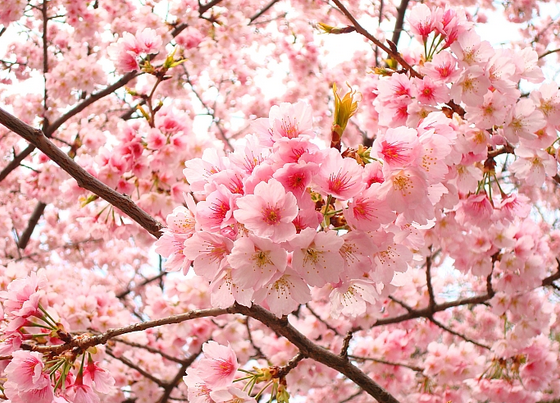
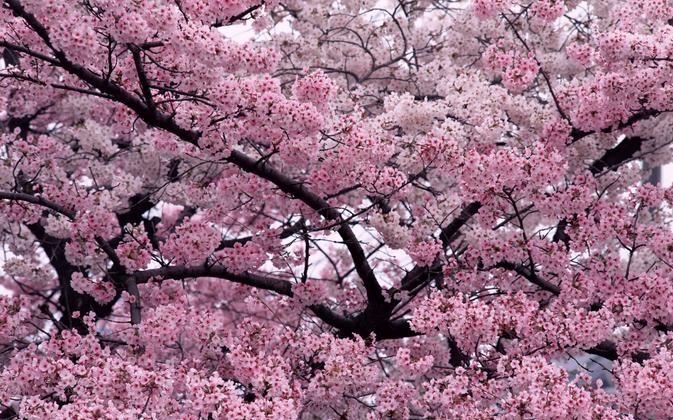
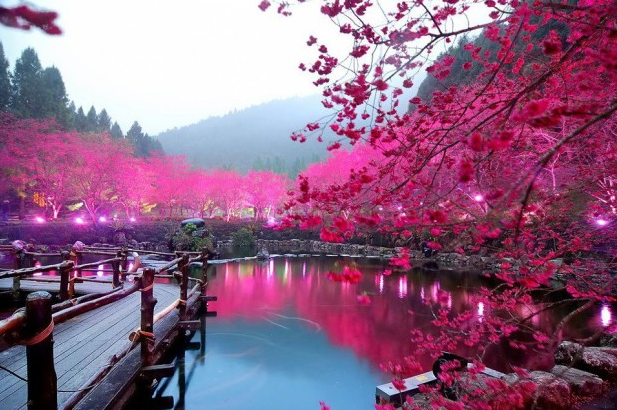
A cherry bloom is the blossom of any of a few trees of class Prunus, especially the Japanese Cherry, Prunus serrulata, which is called sakura after the Japanese. Cherry bloom is theorized to be local to the Himalayas.


A cherry bloom is the blossom of any of a few trees of variety Prunus, especially the Japanese Cherry, Prunus serrulata, which is called sakura after the Japanese (桜 or 櫻; さくら). Cherry bloom is guessed to be local to the Himalayas. Currently it is broadly circulated, particularly in the mild zone of the Northern Hemisphere, for example, Europe, West Siberia, China, Japan, United States, and so forth. Huge numbers of the assortments that have been developed for decorative utilization don't create organic product. Consumable fruits for the most part originate from cultivars of the related species Prunus avium and Prunus.

In Japan, cherry blooms additionally symbolize mists because of their tendency of sprouting as once huge mob, other than being a persisting representation for the fleeting way of life, a part of Japanese social custom that is regularly connected with Buddhist impact, and which is typified in the idea of mono no mindful. The relationship of the cherry bloom with mono no mindful goes back to 18th-century researcher Motoori Norinaga. The brevity of the blooms, the compelling excellence and brisk demise, has regularly been connected with mortality; therefore, cherry blooms are luxuriously typical, and have been used frequently in Japanese workmanship, manga, anime, and film, and in addition at musical exhibitions for encompassing impact. There is no less than one mainstream people melody, initially implied for the shakuhachi (bamboo woodwind), titled "Sakura", and a few pop melodies. The blossom is likewise spoken to on all way of customer products in Japan, including kimono, stationery, and dishware. At Himeji Castle, Japan The Sakurakai or Cherry Blossom Society was the name picked by youthful officers inside the Imperial Japanese Army in September 1930 for their mystery society created with the objective of redesigning the state along totalitarian battle ready lines, through a military rebellion if essential. Amid World War II, the cherry bloom was utilized to rouse the Japanese individuals, to stir patriotism and militarism among the people. Indeed, even before the war, they were utilized as a part of publicity to motivate "Japanese soul," as in the "Melody of Young Japan," delighting in "warriors" who were "prepared like the heap cherry blooms to scramble." In 1932, Akiko Yosano's verse asked Japanese fighters to persist sufferings in China and contrasted the dead officers with cherry blooms. Contentions that the arrangements for the Battle of Leyte Gulf, including all Japanese boats, would open Japan to genuine threat in the event that they fizzled, were countered with the supplication that the Navy be allowed to "sprout as blossoms of death." The last message of the powers on Peleliu was "Sakura, Sakura" — cherry blooms. Japanese pilots would paint them on the sides of their planes before setting out on a suicide mission, or even take branches of the trees with them on their missions. A cherry bloom painted as an afterthought of the aircraft symbolized the power and ephemerality of life; thusly, the stylish affiliation was changed such that falling cherry petals came to speak to the penance of youth in suicide missions to respect the ruler. The main kamikaze unit had a subunit called Yamazakura or wild cherry bloom. The administration even urged the individuals to accept that the souls of brought down warriors were resurrected in the blooms. In its pioneer endeavors, royal Japan frequently planted cherry trees as a method for "asserting involved domain as Japanese space". Cherry blooms are a predominant image in Irezumi, the customary craft of Japanese tattoos. In tattoo craftsmanship, cherry blooms are regularly consolidated with other excellent Japanese images like koi fish, mythical beasts or tigers.


Japan has a wide mixed bag of cherry blooms (sakura); well more than 200 cultivars can be observed there. The most prevalent mixed bag of cherry bloom in Japan is the Somei Yoshino. Its blossoms are almost immaculate white, tinged with the palest pink, particularly close to the stem. They sprout and more often than not fall inside a week, prior to the forgets come. Thusly, the trees look almost white through and through. The mixture takes its name from the town of Somei (now some piece of Toshima in Tokyo). It was produced in the mid- to late-19th century toward the end of the Edo period and the start of the Meiji period. The Somei Yoshino is so generally connected with cherry blooms that jidaigeki and different works of fiction regularly portray the assortment in the Edo period or prior; such portrayals are chronological errors. Winter sakura or fuyuzakura (Prunus subhirtella autumnalis) starts to blossom in the fall and keeps sprouting sporadically all through the winter. It is said to be a cross between edohiganzakura, the Tokyo Higan cherry (P. incisa) and mamezakura (P. pendula). Different classes incorporate yamazakura, yaezakura, and shidarezakura. The yaezakura have vast blooms, thick with rich pink petals. The shidarezakura, or sobbing cherry, has branches that fall like those of a sobbing willow, bearing falls of pink blossoms.


Continue Reading...

SAKURA

A cherry bloom is the blossom of any of a few trees of class Prunus, especially the Japanese Cherry, Prunus serrulata, which is called sakura after the Japanese. Cherry bloom is theorized to be local to the Himalayas.

A cherry bloom is the blossom of any of a few trees of variety Prunus, especially the Japanese Cherry, Prunus serrulata, which is called sakura after the Japanese (桜 or 櫻; さくら). Cherry bloom is guessed to be local to the Himalayas. Currently it is broadly circulated, particularly in the mild zone of the Northern Hemisphere, for example, Europe, West Siberia, China, Japan, United States, and so forth. Huge numbers of the assortments that have been developed for decorative utilization don't create organic product. Consumable fruits for the most part originate from cultivars of the related species Prunus avium and Prunus.

In Japan, cherry blooms additionally symbolize mists because of their tendency of sprouting as once huge mob, other than being a persisting representation for the fleeting way of life, a part of Japanese social custom that is regularly connected with Buddhist impact, and which is typified in the idea of mono no mindful. The relationship of the cherry bloom with mono no mindful goes back to 18th-century researcher Motoori Norinaga. The brevity of the blooms, the compelling excellence and brisk demise, has regularly been connected with mortality; therefore, cherry blooms are luxuriously typical, and have been used frequently in Japanese workmanship, manga, anime, and film, and in addition at musical exhibitions for encompassing impact. There is no less than one mainstream people melody, initially implied for the shakuhachi (bamboo woodwind), titled "Sakura", and a few pop melodies. The blossom is likewise spoken to on all way of customer products in Japan, including kimono, stationery, and dishware. At Himeji Castle, Japan The Sakurakai or Cherry Blossom Society was the name picked by youthful officers inside the Imperial Japanese Army in September 1930 for their mystery society created with the objective of redesigning the state along totalitarian battle ready lines, through a military rebellion if essential. Amid World War II, the cherry bloom was utilized to rouse the Japanese individuals, to stir patriotism and militarism among the people. Indeed, even before the war, they were utilized as a part of publicity to motivate "Japanese soul," as in the "Melody of Young Japan," delighting in "warriors" who were "prepared like the heap cherry blooms to scramble." In 1932, Akiko Yosano's verse asked Japanese fighters to persist sufferings in China and contrasted the dead officers with cherry blooms. Contentions that the arrangements for the Battle of Leyte Gulf, including all Japanese boats, would open Japan to genuine threat in the event that they fizzled, were countered with the supplication that the Navy be allowed to "sprout as blossoms of death." The last message of the powers on Peleliu was "Sakura, Sakura" — cherry blooms. Japanese pilots would paint them on the sides of their planes before setting out on a suicide mission, or even take branches of the trees with them on their missions. A cherry bloom painted as an afterthought of the aircraft symbolized the power and ephemerality of life; thusly, the stylish affiliation was changed such that falling cherry petals came to speak to the penance of youth in suicide missions to respect the ruler. The main kamikaze unit had a subunit called Yamazakura or wild cherry bloom. The administration even urged the individuals to accept that the souls of brought down warriors were resurrected in the blooms. In its pioneer endeavors, royal Japan frequently planted cherry trees as a method for "asserting involved domain as Japanese space". Cherry blooms are a predominant image in Irezumi, the customary craft of Japanese tattoos. In tattoo craftsmanship, cherry blooms are regularly consolidated with other excellent Japanese images like koi fish, mythical beasts or tigers.

Japan has a wide mixed bag of cherry blooms (sakura); well more than 200 cultivars can be observed there. The most prevalent mixed bag of cherry bloom in Japan is the Somei Yoshino. Its blossoms are almost immaculate white, tinged with the palest pink, particularly close to the stem. They sprout and more often than not fall inside a week, prior to the forgets come. Thusly, the trees look almost white through and through. The mixture takes its name from the town of Somei (now some piece of Toshima in Tokyo). It was produced in the mid- to late-19th century toward the end of the Edo period and the start of the Meiji period. The Somei Yoshino is so generally connected with cherry blooms that jidaigeki and different works of fiction regularly portray the assortment in the Edo period or prior; such portrayals are chronological errors. Winter sakura or fuyuzakura (Prunus subhirtella autumnalis) starts to blossom in the fall and keeps sprouting sporadically all through the winter. It is said to be a cross between edohiganzakura, the Tokyo Higan cherry (P. incisa) and mamezakura (P. pendula). Different classes incorporate yamazakura, yaezakura, and shidarezakura. The yaezakura have vast blooms, thick with rich pink petals. The shidarezakura, or sobbing cherry, has branches that fall like those of a sobbing willow, bearing falls of pink blossoms.


Continue Reading...

SUNFLOWER.

Helianthus annuus, the regular sunflower, is a yearly types of sunflower developed as a harvest for its eatable oil and consumable natural products. This types of sunflower is additionally utilized as winged creature nourishment, as domesticated animals rummage, and in some modern applications.

The sunflower (Helianthus annuus) is a yearly plant in the family Asteraceae, with a vast bloom head (capitulum). The stem of the bloom can grow up to 3 meters tall, with a blossom head that can be 30 cm wide. Different sorts of sunflowers incorporate the California Royal Sunflower, which has a burgundy (red + purple) blossom head. The bloom head is really an inflorescence made of hundreds or a large number of little blooms called florets. The focal florets resemble the core of an ordinary bloom, and the external florets look like yellow petals. All together they make up a "false blossom" or pseudanthium. The advantage to the plant is that it is effortlessly seen by the bugs and flying creatures which fertilize it, and it delivers a great many seeds. The sunflower is the state bloom of Kansas. That is the reason Kansas is now and then called the Sunflower State. To develop well, sunflowers need full sun. They develop best in prolific, wet, very much depleted soil with a ton of mulch. In business planting, seeds are planted 45 cm (1.5 ft) separated and 2.5 cm (1 in) profound.


The external petal-bearing florets are the sterile florets and can be yellow, red, orange, or different hues. The florets inside the roundabout head are called circle florets, which develop into seeds. The blossom petals inside the sunflower's group are dependably in a winding example. By and large, every floret is arranged toward the following by pretty nearly the brilliant point, 137.5°, delivering an example of interconnecting spirals, where the quantity of left spirals and the quantity of right spirals are progressive Fibonacci numbers. Ordinarily, there are 34 spirals in one course and 55 in the other; on a substantial sunflower there could be 89 in one heading and 144 in the other. Sunflowers generally develop to statures somewhere around 1.5 and 3.5 m (5–12 ft.). The tallest sunflower affirmed by Guinness World Records is 8.0 m (2009, Germany).


Sunflower "entire seed" (natural product) are sold as a nibble nourishment, in the wake of cooking in stoves, with or without salt included. Sunflowers can be transformed into a peanut spread option, Sunbutter. In Germany, it is combined with rye flour to make Sonnenblumenkernbrot (actually: sunflower entire seed bread), which is truly famous in German-talking Europe. It is additionally sold as nourishment for winged creatures and can be utilized specifically as a part of cooking and plates of mixed greens. Sunflower oil, extricated from the seeds, is utilized for cooking, as a bearer oil and to create margarine and biodiesel, as it is less expensive than olive oil. A scope of sunflower mixtures exist with contrasting unsaturated fat creations; some 'high oleic' sorts contain a more elevated amount of sound monounsaturated fats in their oil than Olive oil. The cake staying after the seeds have been prepared for oil is utilized as an animals sustain. Some as of late created cultivars have hanging heads. These cultivars are less alluring to nursery workers developing the blooms as elaborate plants, however speak to ranchers, on the grounds that they decrease winged animal harm and misfortunes from some plant maladies. Sunflowers additionally create latex and are the subject of trials to enhance their suitability as an option crop for creating hypoallergenic elastic. Customarily, a few Native American gatherings planted sunflowers on the north edges of their greenery enclosures as a "fourth sister" to the better known three sisters mix of corn, beans, and squash. Yearly species are regularly planted for their allelopathic properties.[source?] However, for business ranchers developing product edits, the sunflower, similar to some other undesirable plant, is frequently viewed as a weed. Particularly in the midwestern USA, wild (perpetual) species are frequently found in corn and soybean fields and can have a negative effect on yields. Sunflowers might likewise be utilized to concentrate lethal fixings from soil, for example, lead, arsenic and uranium. They were utilized to uproot uranium, cesium-137, and strontium-90 from soil after the Chernobyl debacle (see phytoremediation).


Continue Reading...

Followers

Popular Posts